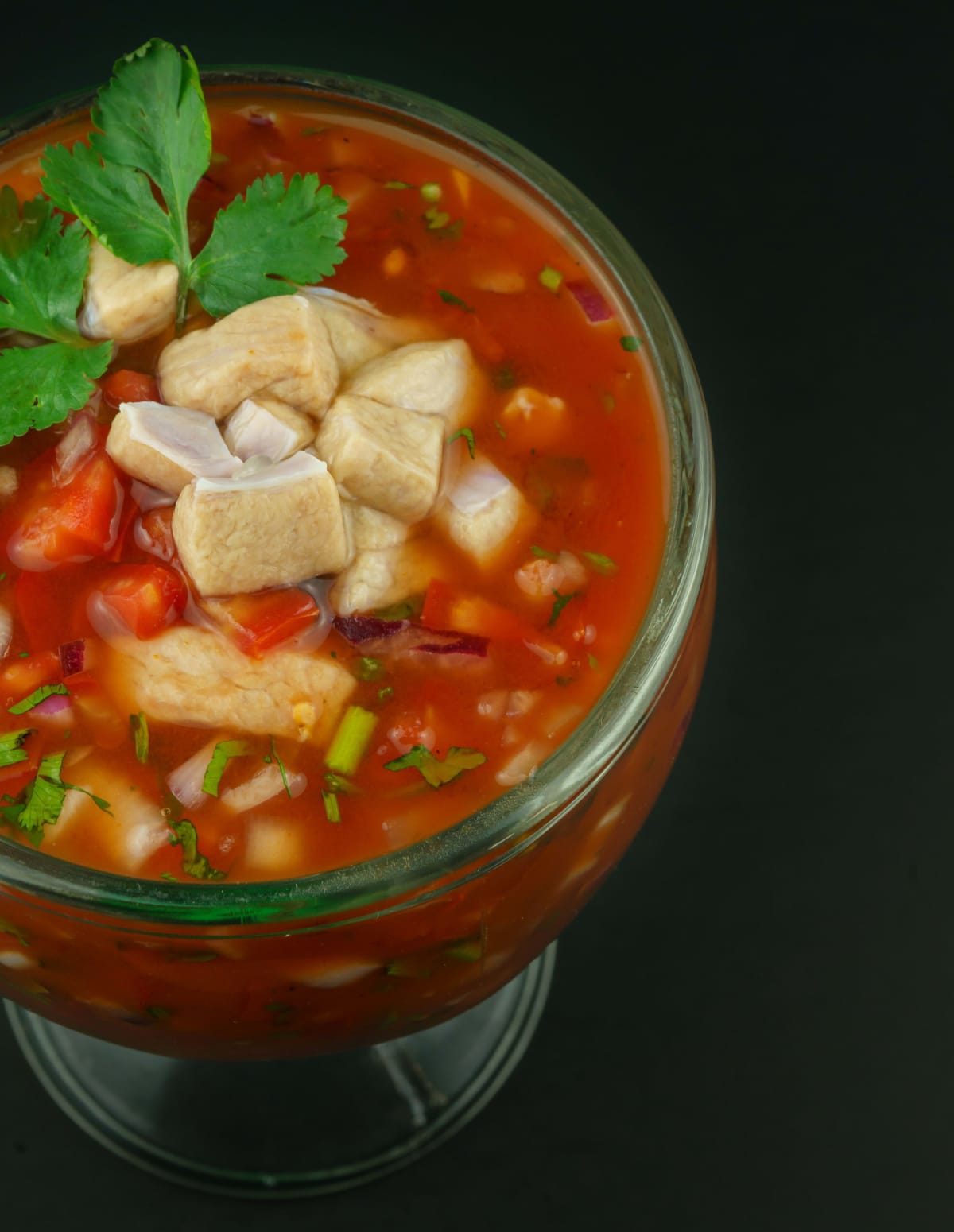
Córdoba-style salmorejo with ham shavings
Salmorejo is summer made into a spoonful. Cold, silky, deep in flavour, with that velvety texture only blended bread gives it. It’s Córdoban by origin, but it’s been eaten all over Spain for decades as a refreshing starter from May to September. And the classic, non-negotiable crowning is Iberian ham shavings scattered just before serving.
In Guijuelo we understand it as a very elegant way of using up the shavings left over from carving a piece, those small bits that don’t come out as a slice but concentrate flavour. Over the intense red of the salmorejo, the acorn-fed shavings give a contrast of colour, texture and aroma. A simple dish to make and one of the best for receiving guests.
Ingredients for 4 people
- 1 kg of ripe tomatoes (pear or vine, deeply red, at their point)
- 200 g of day-old country loaf, crustless (sourdough is best)
- 1 medium garlic clove (without the inner germ if it’s very pungent)
- 120 ml of extra-virgin olive oil (a fruity EVOO, mild or medium)
- 1 teaspoon of sherry vinegar (optional, gives the Andalusian touch)
- Salt to taste
- To crown: 80 g of shavings or small dice of acorn-fed Iberian ham + 2 hard-boiled eggs + an extra drizzle of EVOO
Step by step
- Hydrate the bread. Tear the crustless bread into a dish and cover with 100 ml of the weight of the peeled tomatoes (we’ll see that in the next step). Let it soak for 10 minutes. The bread has to be soaked through but whole, not falling apart.
- Prepare the tomatoes. Make a cross-cut in the base of each, blanch them for 30 seconds in boiling water and move to cold water. The skin comes off on its own. Chop, remove the seeds if you want a finer texture (you can leave them for a more rustic version) and keep the juice they release when cut.
- Blend everything together. In a powerful jug blender, add the peeled tomatoes with their juice, the hydrated bread, the garlic, the salt and the vinegar. Blend for a minute at high speed until smooth.
- Emulsify with the oil. With the blender running at medium speed, add the olive oil in a continuous, thin thread. This step is key: it’s what gives salmorejo its silky texture and its characteristic orange-pink colour (a well-made salmorejo isn’t tomato-red, it’s salmon-orange). Blend another 30–40 seconds until integrated.
- Strain if you want a finer finish, passing it through a fine-mesh sieve or a chinois. It’s optional: if your blender is powerful, it may not be needed.
- Adjust the salt and vinegar carefully. Better to fall short than to overdo it.
- Refrigerate at least 1 hour, ideally 2–3 hours. Salmorejo gains enormously from resting in the cold: the flavours settle and the texture becomes denser. Serving it lukewarm is a serious mistake.
- Prepare the hard-boiled eggs: boil 10 minutes from cold water, move to iced water, peel and chop finely.
- Serve in deep individual bowls, well chilled. Place a small mound of Iberian ham shavings on top, sprinkle with the chopped hard-boiled egg and finish with a generous drizzle of raw extra-virgin olive oil in a spiral.
Serve immediately, with toasted bread alongside if you like.
Suggested pairing
Salmorejo, cold and unctuous, calls for wines with freshness and minerality. A well-chilled fino or manzanilla is a textbook pairing: it shares the Andalusian origin, balances the oil’s fat and brings out the salty edge of the ham shavings. If you prefer a fuller-bodied white, a Rueda verdejo or a Bierzo godello work very well.
For those who prefer red, better something light and served cool: a young mencía around 14 degrees. Avoid powerful oaky reds: they smother the dish. For beer, a well-chilled lager is the informal summer-meal option.
Recommended Hernández Jiménez product
For the finishing touch of this recipe we want ham that brings concentrated flavour and visible fat veins that contrast with the salmorejo’s red. Any of our acorn-fed pieces is perfect: the acorn-fed pata negra ham, Guijuelo PDO is the highest option, and the 75% Iberian-breed acorn-fed ham, Guijuelo PDO the most balanced value-for-money option for this use.
If you have a whole piece at home, this is exactly the kind of recipe the small shavings and trimmings from carving are perfect for: chop them a little smaller than you’d put on a board and use them over the salmorejo.
House tricks
- Real tomato. This recipe lives off the tomato. In August it’s perfect; in February, better cook something else. If you can’t find ripe tomato at its point, abandon the plan and make croquettes.
- Day-old bread, crustless. Fresh bread holds up worse to blending and releases excess starch. The crust adds nothing and leaves specks in the result.
- The oil in a thread is what makes the difference. Throwing in all the oil at once gives a separated, greasy salmorejo; in a thread and with the blender running, it emulsifies and turns silky like a mayonnaise. Five minutes of patience.
- Properly cold, not kitchen-cool. A minimum of an hour in the fridge, ideally with the bowls chilling too. Serving in bowls previously put in the fridge for 15 minutes lifts the dish.
- The shavings go on at the last moment, not before. If you put them on early, they soften with the salmorejo and lose texture. Five seconds before going to the table.
- For a thicker version (a paste-like dip for bread), reduce the water: use only the tomato juice without adding anything. Denser, more concentrated in flavour.
- Leftovers: keeps 2 days in the fridge well covered, but loses its sheen on the second day. Better eaten the same day or the next.