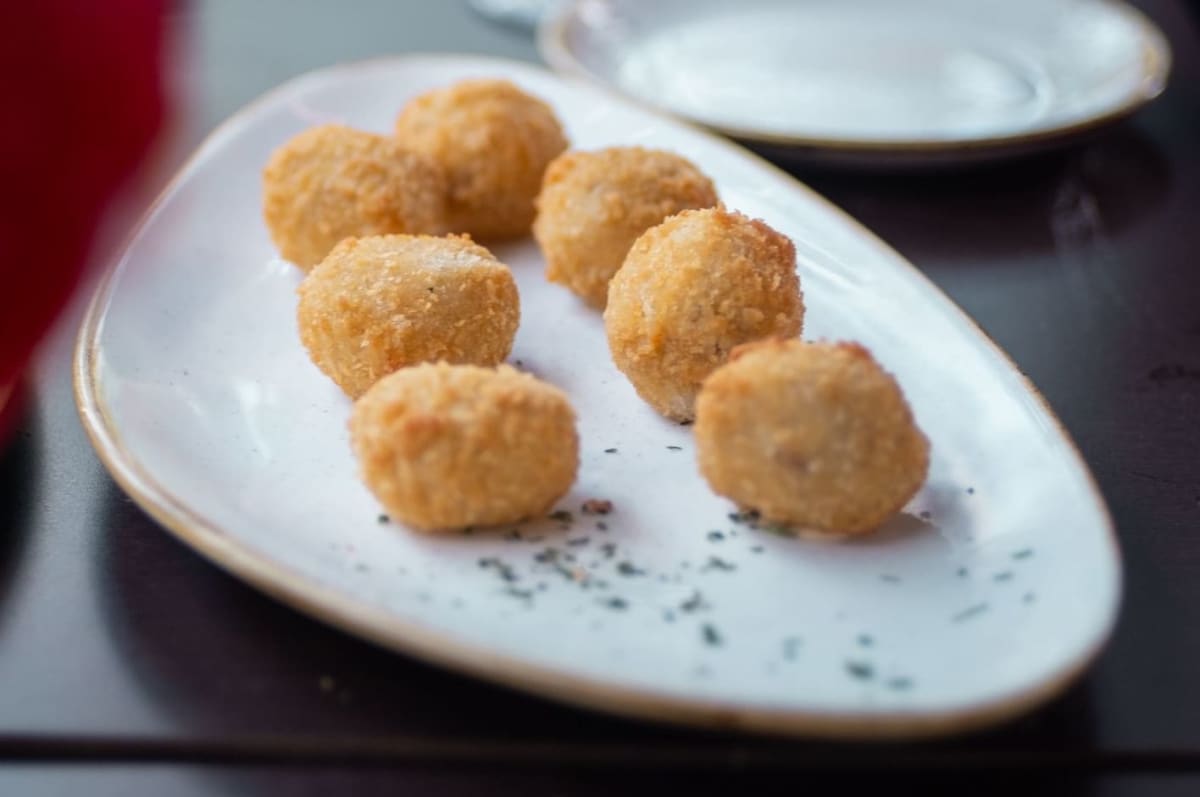
Croquettes with Iberian ham bone
If there’s one recipe that hasn’t changed in this house in four generations, it’s croquettes with ham bone. The trick isn’t the flour or the coating: it’s infusing the milk with a cured ham bone for hours, until the white liquid turns into something deep, salty and sweet at the same time. The rest is patience with a wooden spoon.
Here in Guijuelo, when a piece was finished, the bone was never thrown away. It was kept for a stew, for lentils or, above all, for croquettes. It’s the use-it-up recipe par excellence and, at the same time, one of the finest things you can put on the table. A very Spanish contradiction.
Ingredients for 4 people
For about 20–24 croquettes:
- 1 Iberian ham bone, clean (the punta or shank, chopped if it fits the pot better)
- 1 litre of whole milk
- 100 g of butter
- 80 g of wheat flour
- 120 g of acorn-fed Iberian ham in small dice or shavings
- 1 small onion, very finely chopped
- Salt, white pepper and a pinch of nutmeg
- For coating: 2 eggs, breadcrumbs (panko if you can find it) and flour
- Mild olive oil for frying (sunflower oil works if you prefer a more neutral flavour)
Step by step
- Infuse the milk. Put the ham bone in a pot with the litre of whole milk. Bring to a very low heat, without letting it boil, and keep for 45 minutes. The milk should take on a light toasted colour and an intense aroma of cured ham. Strain, remove the bone (you can keep the marrow for a stock) and set aside.
- Sweat the onion. In a wide pot, melt the butter over low heat. Add the chopped onion with a pinch of salt and let it sweat for 15 minutes, without colouring. It has to be translucent, almost dissolved.
- Toast the flour. Raise the heat slightly and add the flour all at once. Stir constantly for 3–4 minutes with a wooden spoon, until the mixture turns lightly golden and smells of toasted biscuit. No rushing.
- Add the infused milk a little at a time, stirring vigorously with each batch so no lumps form. Start with a ladleful, integrate, and keep adding the rest as the béchamel grows. This takes its 15–20 minutes. It’s the moment to have the radio on.
- When the béchamel is thick and pulls away from the sides of the pot, add the chopped Iberian ham, a pinch of nutmeg and adjust the salt carefully (the ham already brings its own). Cook two more minutes and remove.
- Spread the mixture in a greased shallow dish or one lined with film. Cover with film touching the surface and cool first at room temperature, then in the fridge for at least 4 hours. Better overnight.
- Shape the croquettes with lightly greased hands. Pass through flour, beaten egg and breadcrumbs, in that order. For a crunchier coating, repeat the egg + crumb step.
- Fry in plenty of oil at 180 degrees, in small batches, until golden. Drain on kitchen paper.
Serve them hot, freshly made, without waiting.
Suggested pairing
Croquettes call for something that cleans the fat without smothering the ham’s flavour. A well-chilled fino or manzanilla works like few things: the wine’s salty edge accentuates the Iberian’s and the freshness cuts through the creaminess. If you prefer red, a young mencía from Bierzo or a light garnacha without heavy oak. And a well-chilled pilsner-style beer is the Sunday-at-home option, no complications.
Recommended Hernández Jiménez product
For this recipe what matters is the quality of the bone and the chopped ham. The acorn-fed pata negra ham, Guijuelo PDO gives the best result: it brings an unctuous fat and a very marked aromatic profile that holds up to cooking.
A practical tip: if you buy a whole piece, ask us for the bone when ordering. We keep it clean and chopped so it arrives ready to use. It’s one of the most requested ways of using it up and almost no one throws it away in this house.
House tricks
- Whole milk can’t be substituted. The semi-skimmed versions come out poorer and the ham’s fat doesn’t integrate the same. For an extra-creamy croquette, replace 100 ml of milk with cooking cream.
- The proportion of 80 g flour per 1 litre of liquid is the border between a creamy croquette and a stodgy one. Too much flour is the classic mistake. For a denser béchamel, give it more time on the heat instead of adding more flour.
- The cold rest isn’t optional: hot mixture can’t be handled and breaks when frying. A minimum of 4 hours, ideally 24.
- Oil at 180 degrees, no more, no less. Hotter and they burn outside, raw inside; cooler and they soak up oil and go soft. A kitchen thermometer is the best €10 you can spend.
- Fry few at a time (4–5 maximum) so the oil doesn’t lose temperature.
- If you want to freeze them, do it after coating, separated on a tray. Once frozen, into a bag. They’re fried straight from frozen, lowering the oil temperature a little to 170 degrees so the inside heats through well.