The hands that tend every piece
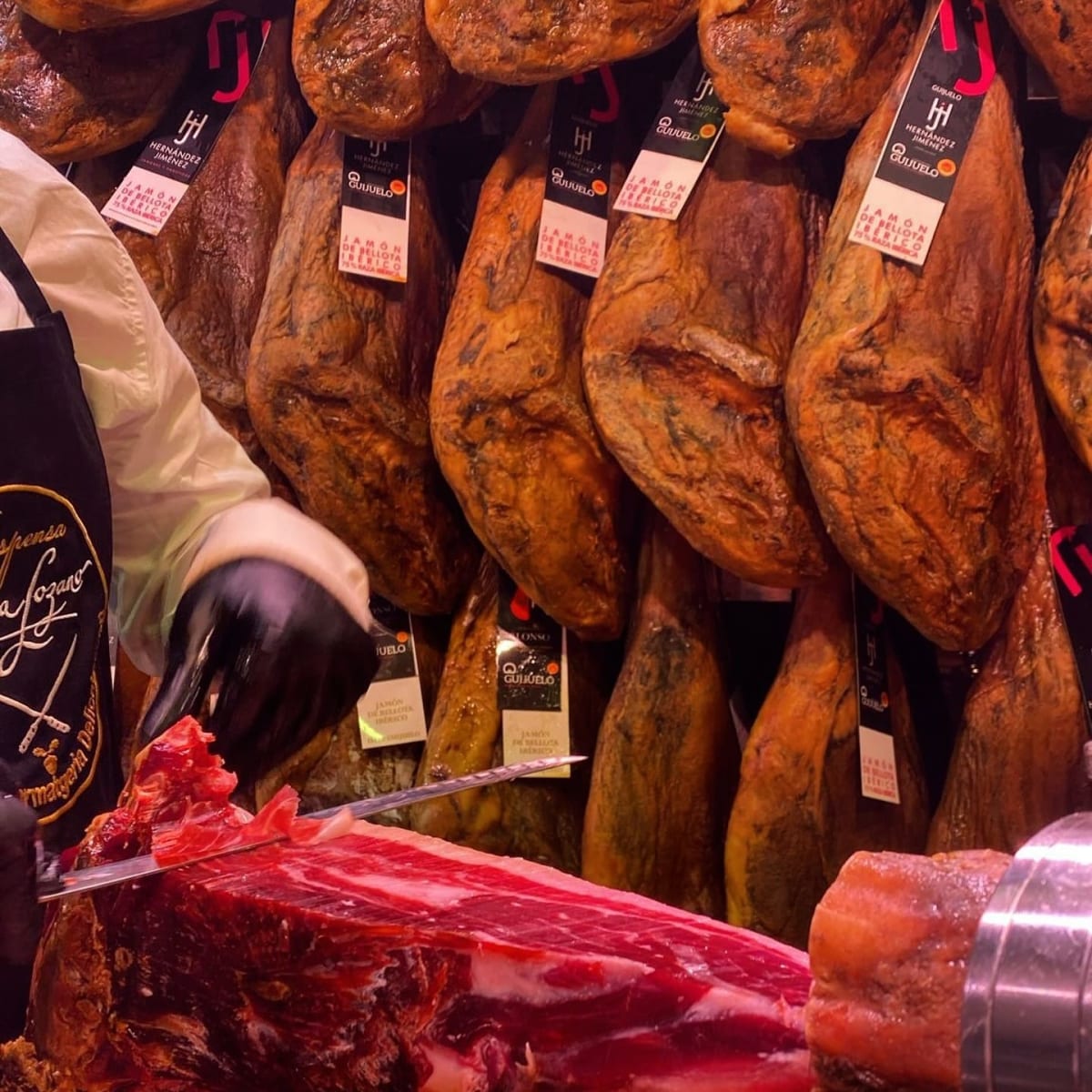
At Hernández Jiménez we are producers, not intermediaries. And producing means, above all, people with a craft. Behind every piece of ham that leaves Guijuelo there is a team that knows the cellar like their own home, that carries the salt in their hands and that recognises a good ham before it is even cut. This page is for them.
The cellar master
The cellar master is the one who decides when a piece is ready to leave. He keeps track of the time, of the weight lost during curing, of the ambient humidity, of the winds coming in off the sierra. He probes each piece with a sharpened bone and smells it at once: the aroma of the bone as it comes out says more than any laboratory analysis.
In our house, the current cellar master has led the drying rooms for [X years], trained by his father and his grandfather. His routine starts at dawn, checking the temperature and humidity of the three curing rooms. Before every batch goes out, he personally tastes one piece from each lot.
“A good piece is recognised by its smell before you taste it. If the nose tells you nothing, the mouth will tell you little.” — José, Master Ham Carver
The master carver
The master carver is the last pair of hands before the customer. At Hernández Jiménez we carve by knife (also by machine when the format calls for it, but most of the vacuum-packed sliced product you see in the catalogue is knife-cut). Each carver has their own set of knives: a long, flexible ham knife for the slices, a wide one for rind and fat, a paring knife for the bone.
A whole piece carved properly takes 6–8 hours between the initial cleaning, the full carving and the packing. The carver doesn’t just cut: they decide the direction of every slice according to the area of the ham, the thickness according to where the shipment is going (end customer, hospitality, gift) and the ideal temperature of the piece at each moment. The fat must shine as it is cut; if it is dull, the piece is not at temperature.
“The knife doesn’t cut the ham. The ham lets itself be cut by the knife. Your job is to listen to the piece.” — José, Master Ham Carver
The control and traceability team
Behind the two visible crafts there is a quality and traceability team that ensures every piece can be followed from the farm of origin to the customer’s plate. They keep the salting records, the audits of the Guijuelo PDO Regulatory Council, the external ENAC controls, and the file of each individual piece with its seal number.
If you ask us for the traceability of a piece of yours, they are the ones who send you the full history within 48 hours. It is not a formality: it is the guarantee behind what we say.
How this craft is learned
The craft of ham curing is not learned in a week. Traditionally it has been passed from parents to children, with years of apprenticeship beside the master before taking on responsibility of one’s own. At Hernández Jiménez we follow that path: the apprentices who come into the cellar spend two or three years working under supervision before taking on lots by themselves.
Today we combine tradition with modern training: courses run by the Regulatory Council itself, exchanges with other historic houses of the PDO, and a young team that ensures the knowledge is not lost between generations. Four generations of the Hernández Jiménez family — from Felipe in 1890 to María del Mar and Francisco today — have held to the same principle: time and respect for the product are not negotiable.
Learn to carve like they do
If you’re interested in carving technique, we’ve prepared a complete guide with a step-by-step of the first cut, the most common mistakes and how to protect the piece between sessions:
How to carve a ham step by step →
And if you’d like to know how we cure in the cellar over the 36 months that separate the pig in the dehesa from the slice that reaches your plate, we tell it in detail here:
The curing process in Guijuelo →
Would you like to come and see it in person? We accept arranged visits to the factory. Write to us at info@jamongourmet.es or stop by the Visit us in Guijuelo section of the home page.