What is pata negra ham: no beating around the bush
In nearly forty years of curing, we have heard the same confusion thousands of times. Someone comes in looking for “pata negra” and assumes that any Iberian ham falls into that category. It does not. The term has a very precise technical and legal meaning, and understanding it completely changes the way you buy ham.
What the regulation says, in cellar language
Spanish Iberian ham regulations establish four categories based on two variables: the breed of the pig and what it has eaten. The black label — the pata negra — requires that both conditions be met at their highest level simultaneously.
First, the breed: the pig must be 100% pure Iberian. Not 75%, not 50%. One hundred percent. That means both parents are certified Iberian breed, with no crossbreeding with Duroc or any other breed. These animals are the minority of the minority: they represent a very small fraction of total Spanish Iberian production.
Second, the diet: the pig must have gone through the montanera in freedom. The montanera is the season — roughly October to February — when pigs roam the dehesa oak woodland and fatten on acorns alone. Only acorns and grass. No supplementary feed of any kind. It is during those months that the pig’s fat absorbs the fatty acids that give the ham its melting texture and long finish.
Without 100% pure Iberian breed plus acorn montanera, there is no pata negra. With only one of the two conditions met, you have Iberian bellota or cebo ham — but not the top tier.
The most common myth: pata negra is not synonymous with bellota
This is the most widespread misunderstanding. Many people use “pata negra” as a generic synonym for “good Iberian ham” or “acorn-fed ham.” They are not the same thing.
A 75% Iberian bellota ham is excellent. It comes from the montanera, the pig has eaten acorns, the quality is very high. But it is not pata negra. It lacks the pure breed requirement. And the difference in flavour and texture — once you learn to tell them apart — is real and noticeable.
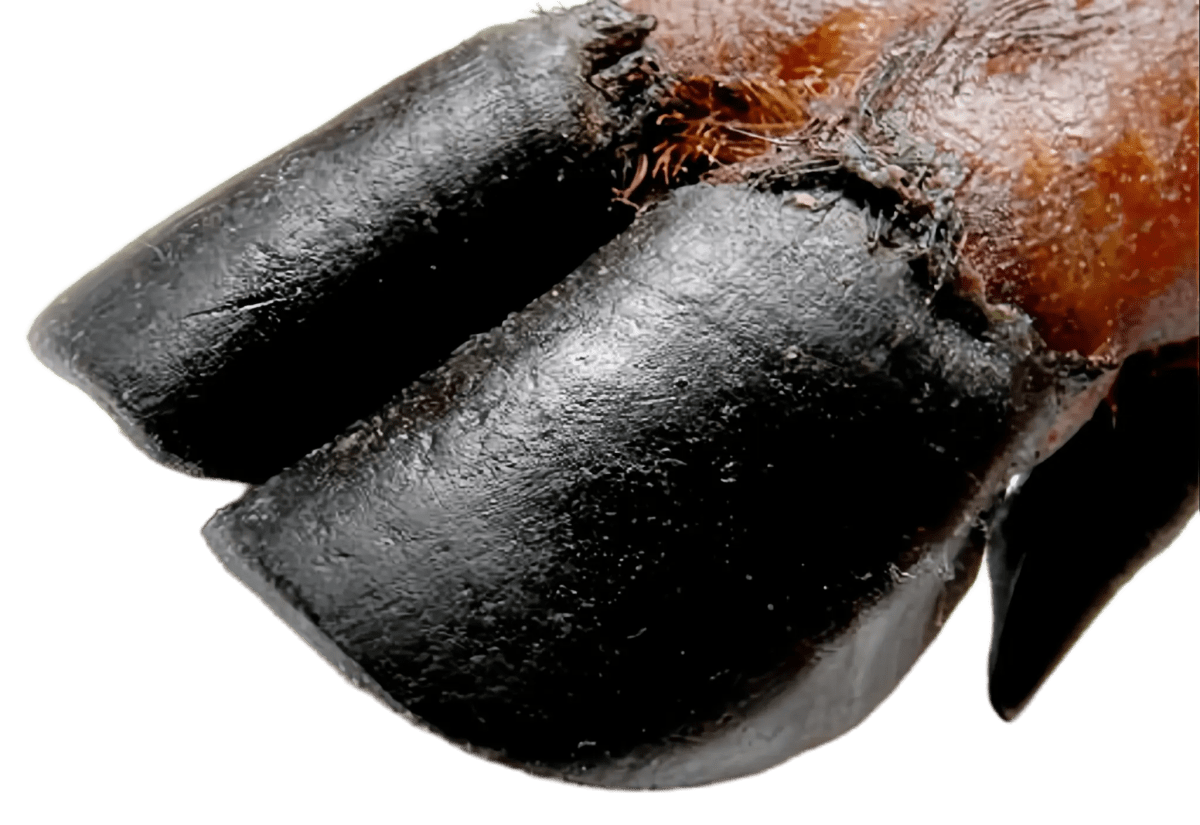
The dark hoof, incidentally, is not a reliable indicator. There are Iberian breeds of acknowledged quality — the rubio andaluz, the manchado de Jabugo, the Torbiscal — that have pale or whitish hooves. Royal Decree 4/2014 does not include hoof colour among the official criteria for quality or breed purity: it is an inherited trait that varies among individuals of the same breed and says nothing about the montanera or the animal’s genetics. What determines the category is the tag, not the hoof.
The Iberian pig does have a characteristic body shape that is more informative: the shank is noticeably longer and the legs more slender than in a commercial white pig. That body structure — the result of thousands of years of adaptation to the dehesa and to covering long distances in search of acorns — is visually far more reliable than hoof colour for recognising an Iberian animal. Even so, the only definitive guarantee remains the tag.
How to identify it in practice
Every Iberian ham sold in Spain carries a colour-coded tag on the hoof that identifies its category according to the 2014 regulation. The black tag corresponds exclusively to 100% Iberian acorn-fed ham: the pata negra.
The red tag is 50% or 75% Iberian bellota. The green tag is free-range Iberian cebo de campo. The white tag is standard Iberian cebo. Those four colours summarise the entire Spanish Iberian production and allow no ambiguity: look at the tag and you know exactly what you have.
In addition to the tag, the ham carries a vitola — the small cloth or paper label wrapped around the shank — with the producer’s name, registration number and the relevant PDO or PGI. On our pieces, the vitola identifies the Guijuelo Protected Designation of Origin.
Why Guijuelo is different from Jabugo, Extremadura or Los Pedroches
There are four designations of origin for Iberian ham in Spain: Guijuelo, Jamón de Huelva (Jabugo), Dehesa de Extremadura and Los Pedroches. All four cover quality ham, but the curing conditions are radically different.
Guijuelo sits at over nine hundred metres altitude in the Salamanca mountain range. The cold is dry and constant, and the winters are long. These conditions mean a slow cure: between twenty-two and thirty months in a natural cellar, sometimes more for larger pieces. The cold slows the process and allows aromas to develop gradually, subtly.
Jabugo and Extremadura have warmer, more humid climates. The curing is different — not worse, different — and produces more intense flavour profiles, sometimes saltier. They also lack Guijuelo’s altitude and the corridor of cold, dry wind that descends from the Béjar and Francia mountain ranges.
We have been using exactly that since 1890: the microclimate of the Salamanca sierra as a curing tool. In 1986, together with other local producers, we co-founded the Guijuelo Protected Designation of Origin specifically to protect and certify that origin and that method.
What pata negra costs and why
The price of a black-label ham reflects what lies behind it: a pure-breed pig that has lived for four to five years before slaughter, a four-month montanera eating acorns in freedom, and over two years of curing in a natural cellar. Production is limited by definition, because 100% pure Iberian pigs are few and the montanera cannot be accelerated.
There is no such thing as cheap pata negra. If the price is too low for what the label promises, it is worth looking at the tag more carefully.
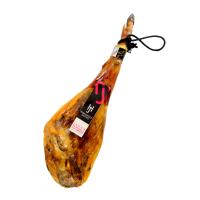
The peak: 100% pure Iberian breed, acorn-fed in the montanera, cured in a natural Guijuelo cellar.
384,00 €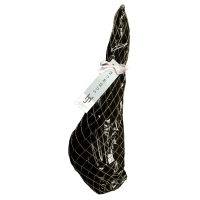
Our flagship: Summun selection of the finest batches, 48 months cured in a century-old Guijuelo cellar, 9-10 kg.
439,00 €If you want to understand more about what goes into our black-label pieces, or compare options at different price points, we explain everything on our pata negra ham page.