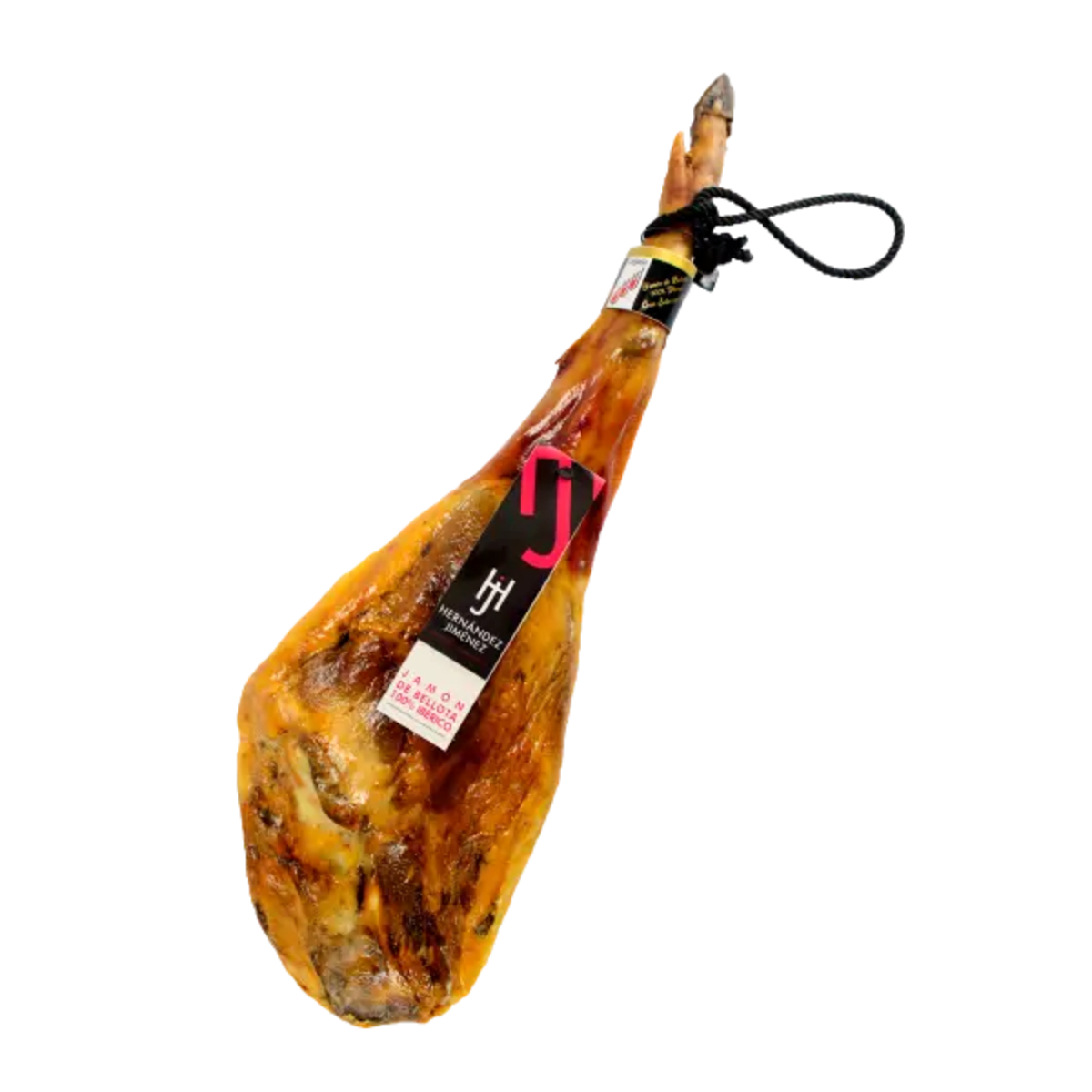
How to Store Iberian Ham Once Opened
A whole leg of acorn-fed ibérico ham can cost upwards of £350. Storing it badly will not ruin it overnight — salt and lengthy curing are robust barriers — but it will gradually degrade the texture, aroma and flavour. This guide explains what to do from the very first slice to the very last.
The essentials: temperature and humidity
Iberian ham that has been cured in a natural cellar is stable at room temperature. It does not need the fridge: excessive cold solidifies the infiltrated fat, hardens the texture and dulls the aromas. Putting an opened ham in the refrigerator is one of the most common — and most damaging — mistakes you can make.
The ideal conditions for an opened piece are:
- Temperature: between 15 and 22 °C. Below 15 °C the fat turns waxy and the ham loses its silky mouthfeel. Above 25–28 °C oxidation accelerates and rancidity can develop.
- Relative humidity: between 55 and 70 %. Very dry environments (below 50 %) quickly dry out the surface. Very humid environments (above 75 %) encourage surface mould.
- Air circulation: moderate. Avoid direct draughts, which dry out the cut area.
- Light: avoid direct sunlight. UV light speeds up lipid oxidation and bleaches the fat.
A suitable spot at home: a cool pantry, an area of the living room away from windows and radiators, or a space under the stairs. In summer, if the temperature stays above 28 °C for a prolonged period, it may be reasonable to keep the ham in the warmest part of the fridge (the vegetable drawer, 12–15 °C), but only for as long as the heat lasts.
The cut surface: the protective fat and the cloth
The surface exposed to air is the most vulnerable part of an opened piece. What protects that area is not cling film or aluminium foil — both of which harm the ham — but the piece’s own fat.
The correct procedure:
- After each cutting session, cover the cut surface with the outer fat slices you removed at the beginning. This fat acts as a natural lid that shields the meat from the air.
- Place a clean, dry cotton cloth over it. The cloth allows gentle breathing (preventing condensation) and keeps dust off.
- Do not use cling film in direct contact with the cut surface: it traps moisture and alters both texture and flavour.
If you do not have enough outer fat to cover the surface properly, you can lightly rub it with a little extra-virgin olive oil. This creates a temporary barrier against oxidation. It is a valid option, though the ham’s own fat is always preferable.
Position on the ham stand (jamonero)
Where you place the leg on the stand determines where you start cutting and how you rotate:
- Begin with the maza (the widest part, around the hip): this is where you will find the greatest yield and the best marbled fat. The maza has more meat and the curing is more even.
- Once the maza is exhausted, turn the leg over and work the contramaza (the opposite, narrower side with more sinew). This part has a different flavour — slightly more cured and intense — and is often the most rewarding at the end.
- The jarrete (the shank section towards the trotter) yields fewer thin slices but is ideal for cubes, croquettes or stews. Do not waste it.
- The bone and trimmings are perfect for stocks and broths. Store them in a vacuum bag or freeze them if you are not going to use them within the next few days.
How long does an opened whole leg last?
A well-kept piece — right temperature, cut surface covered with fat and cloth — keeps perfectly for 3 to 6 weeks once opened. The range is wide because it depends on several factors:
- Frequency of cutting: the more regular the consumption, the better. Legs that are opened on day 1 and revisited on day 15 are far more at risk of drying out or developing mould than those consumed day by day.
- Size of the cut area: a small cut area loses less moisture and is easier to protect. Opening a large area on day one so it “looks impressive” and then failing to consume it at a good pace is a common mistake.
- Environmental conditions: in winter, with central heating and dry air, the piece can dry out faster. In summer, with heat and humidity, the risk shifts to mould.
Common mistakes that degrade the ham
Putting it straight in the fridge. Cold solidifies the fat and mutes the aromas. Ham taken out of the fridge needs 20–30 minutes at room temperature to recover its texture and aromatic expressiveness.
Covering the cut surface with cling film. Plastic prevents breathing and can create humid microclimates that encourage mould. It can also stick to the meat and taint the surface flavour.
Not cleaning the surface before cutting. If there has been some oxidation or a touch of surface mould on the outside (perfectly normal and harmless), remove that layer before reaching the clean meat. Mould on the rind or outer fat does not affect the interior flesh if it is removed properly.
Cutting too thin from the start, or consistently too thick. The ideal thickness is 2–3 mm: thin enough to melt on the palate, substantial enough not to break when serving. Slices that are too thick do not melt; slices that are too thin dry out very quickly.
Not turning the leg over in time. Many people exhaust the maza completely before turning it over to work the contramaza. The result is an enormous cut area that dries out and uneven use of the whole piece.
Storage differences: whole leg vs pre-sliced vs vacuum-packed
Whole leg
This is the most forgiving format. The rind and outer fat act as a natural barrier. Unopened, a whole leg can last for years in the right conditions. Once opened, 3–6 weeks at room temperature with the care described above.
Hand-carved slices (packaged)
Packaged sliced ham is vacuum-sealed and pasteurised, or packed in a protective atmosphere. Unopened, it keeps for 90 to 120 days in the fridge. Once the packet is opened, consume it within 24–48 hours and keep it refrigerated. It is the most convenient format but the one that loses most in terms of texture and aroma compared with freshly carved whole-leg ham: prolonged vacuum and cold slightly alter the silkiness of the fat.
To recover part of the original texture, take the packet out of the fridge 20–30 minutes before serving. The slices will come to temperature and the fat will regain some of its fluidity.
Home vacuum packing (leftovers)
If you have leftover slices from a whole leg and want to keep them for more than a day, home vacuum sealing (with a bag sealer) is a valid option. Store the bags in the fridge and consume within 3–5 days maximum. Always bring to room temperature before serving. Do not freeze ibérico ham slices: ice crystals rupture the muscle cells and destroy the texture irreversibly.
Storing ham properly requires no complicated technique, just consistency: controlled temperature, protected cut surface and regular consumption. With those in place, an acorn-fed DOP leg can remain in excellent condition for weeks after opening.