Extremaduran migas with Iberian chorizo
Migas are a shepherd’s recipe: stale bread several days old, a handful of garlic, lard or oil, whatever the dehesa gave. They were born as functional food and have ended up being a Sunday dish in many homes in Extremadura, Castile and La Mancha. Each area has its variant. Ours, with acorn-fed Iberian chorizo and optional pork belly, is the one that has always been cooked in the livestock families of the west, and the one that here in Guijuelo we think is the most complete version.
The trick is in crumbling the bread (patiently, with just the right moisture), in the cooking order and in not rushing the heat. A good recipe for a slow winter morning, accompanied by cold grapes for contrast. A rustic dish, unpretentious, that fills you up and leaves you content.
Ingredients for 4 people
- 500 g of two- or three-day-old country loaf (sourdough, with a dense crumb, is best)
- 150–180 g of acorn-fed Iberian chorizo in half-cm slices
- 100 g of Iberian pork belly in small dice (optional but recommended)
- 6–8 cloves of garlic, whole, with the skin on
- 1 heaped teaspoon of sweet La Vera paprika
- 100 ml of extra-virgin olive oil
- Salt
- Warm water (about 100 ml) to moisten
- To accompany: 1 bunch of cold grapes (green or black) + 4 optional fried eggs
Step by step
- Crumble the bread the night before. Cut the bread into slices and then crumble it with your hands into irregular crumbs the size of a hazelnut, neither grains nor clumps. Place in a wide dish.
- Moisten the bread. Sprinkle with lightly salted warm water (about 100 ml for 500 g of bread), turning with your hands so the moisture spreads. Cover with a damp wrung-out cloth and let it rest all night (a minimum of 8 hours). The bread has to be loose but slightly damp, not soaked. This is what separates correct migas from sad ones.
- The next day, brown the garlic. In a wide, shallow pan or pot, heat the oil over medium heat. Crush the garlic cloves with the flat of the knife, unpeeled, and brown them slowly for 3–4 minutes until golden and aromatic. Remove and set aside.
- Sauté the chorizo and the pork belly. In the same oil, now garlic-scented, add the chorizo slices and the diced belly. Cook over medium heat for 4–5 minutes until the chorizo releases its orange-red fat and the belly is browned. Remove with a slotted spoon and set aside on a plate. The oil will have taken on a beautiful reddish colour.
- Add the paprika off the heat. Take the pan off the heat, wait 10 seconds for the temperature to drop a little and add the teaspoon of paprika to the oil. Stir vigorously for 5 seconds so it integrates without burning. Burnt paprika ruins the dish.
- Return to the heat and add the migas. Put the moistened bread in the pan and start stirring and tossing constantly with a wooden spoon or spatula. The bread will absorb the reddish oil and start to take colour.
- Cook the migas for 15–20 minutes over medium heat, stirring frequently so they toast evenly. They have to be golden outside, tender inside and loose, never stuck together. If you see them drying too much, add a little more oil; if they’re damp, raise the heat for a few minutes to evaporate.
- Add the chorizo, the belly and the garlic in the last 3–4 minutes, so they warm and mix with the migas without burning again.
- Adjust the salt and serve hot, straight from the pan if possible (it’s more rustic and keeps the temperature).
Accompany with cold grapes in a bowl alongside and, for a more complete version, a fried egg per person on top of the migas. The sweet-cold contrast of the grape with the salty-fatty migas is the classic Extremaduran combination.
Suggested pairing
Migas call for a frank red, with body but without pretension. A Ribera del Guadiana crianza (the Extremaduran denomination par excellence) would be the perfect origin pairing: tempranillo with some barrel, red fruit, soft tannins. Failing that, a Ribera del Duero crianza or a Bierzo mencía with some body work very well.
For something more informal, a toasted or abbey beer accompanies migas surprisingly well, mostly for its malty character that converses with the paprika and the chorizo. And if the after-meal lingers, a glass of Pedro Ximénez sweet wine at the end is a textbook close.
Recommended Hernández Jiménez product
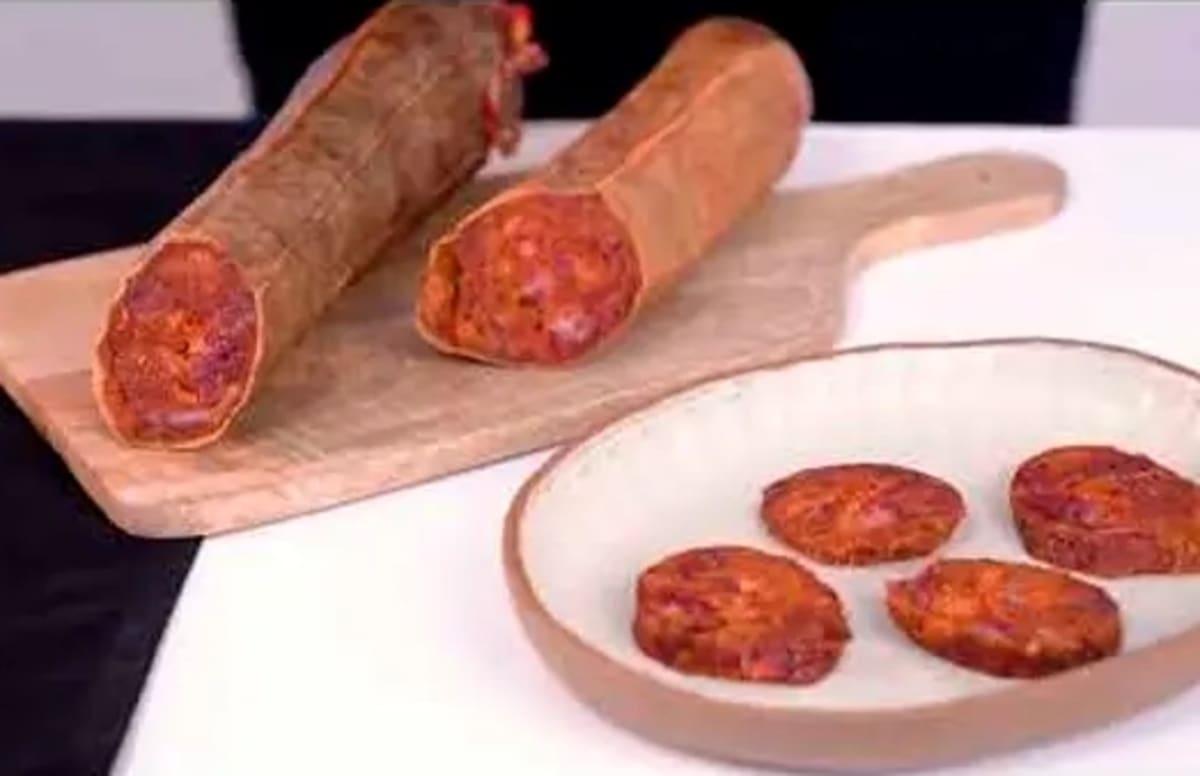
The soul of these migas is the chorizo. The acorn-fed Iberian chorizo, Hernández Jiménez is made with acorn-fed Iberian pork, La Vera paprika and natural cellar curing. It releases an intense red fat when cooked, which is exactly what dyes the migas and gives them that characteristic reddish colour. The difference from a white-pig chorizo shows in the first bite.
If you want to expand the table, a board of acorn-fed Iberian salchichón as a prior aperitif goes perfectly. Uncooked, in thin slices at room temperature, as a starter while the migas finish.
House tricks
- Crumble by hand, without overdoing it. Hazelnut-sized, irregular crumbs. Don’t use a processor or knife: hands give the right size and respect the crumb structure.
- Moisten the night before, don’t improvise. Migas made with bread moistened the same day come out hard or, worse, gummy. The 8-hour rest is what lets the water spread evenly and the bread be ready to toast the next day.
- A wide, shallow pan, not a deep pot. Migas need surface to toast evenly; in a deep pot they steam in their own moisture.
- Stir constantly the first few minutes. Afterwards you can space out the stirring, but the initial toasting stretch calls for a wooden spoon always in hand.
- Paprika off the heat: as in Castilian soup. It burns in five seconds and ruins the dish. Pan off, quick stir, back on the heat.
- Cold grapes compulsory. The contrast isn’t optional in the traditional Extremaduran version. Put the bunch in the fridge an hour before serving. Better grapes with skin, unpeeled, to bite whole between spoonfuls of hot migas.
- Leftovers: they keep two days in the fridge, and reheat superbly in a pan with a drizzle of oil. Some of us argue that next-day migas tossed with an egg on top are better than freshly made ones. A matter of taste.
- Sunday version: with a fried egg on top, serve straight from the pan in the centre of the table, everyone helps themselves with their spoon. It’s how it has always been eaten in many villages of western Extremadura.