The Iberian quality standard (Royal Decree 4/2014)
Behind every “100% Iberian acorn-fed” label there is a law that defines exactly what may be called that. It’s Royal Decree 4/2014, the quality standard that governs the Iberian sector in Spain. Knowing what it regulates gives you the criteria not to overpay for a name.
What it is and what it set in order
Royal Decree 4/2014 is the quality standard for Iberian meat, ham, shoulder and loin. It replaced the previous regulation and brought order to two things that used to cause confusion: the pig’s breed and its diet. Since then, those two variables —and only those— determine how a piece may legally be named. It has been in force since 2014: it is not “the new standard”, it is the standard.
Breed: “100% Iberian” is not a free adjective
The standard distinguishes between 100% Iberian —both parents of pure Iberian breed, registered in the herd-book— and Iberian —cross-breed, usually an Iberian mother and a Duroc father. And it requires something key for the consumer: when the piece is cross-breed, the label must state the percentage of Iberian breed (usually 50% or 75%). Plain “Iberian”, with no percentage, may only be carried by 100%. That “100%” on the label is legally backed information, not a claim.
Diet: three categories, and “recebo” no longer exists
The standard sets three feeding regimes in the final fattening phase:
- Acorn-fed (de bellota): the animal is fattened in the montanera, free-range, feeding on acorns and the natural pasture of the dehesa.
- Free-range grain-fed (de cebo de campo): raised extensively or outdoors, fed feed in addition to the field’s natural resources.
- Grain-fed (de cebo): raised in an intensive holding, fed feed.
The standard removed the old “recebo” category. If you see it on a label or a website, it’s outdated information: it is no longer a legal denomination.
The coloured seal: the standard made visible
So that anyone can verify the category without being an expert, the standard established a mandatory coloured seal on the shank: black (100% Iberian acorn-fed), red (Iberian acorn-fed), green (Iberian free-range grain-fed) and white (Iberian grain-fed). It’s the physical and legal summary of breed + diet. We break it down in Bands and seals.
The sales denomination: the legal name
The piece’s commercial name must be built with the formula the standard sets: diet + breed or percentage. “100% Iberian acorn-fed ham” is a legal denomination; “pata negra” or “pure artisan Iberian” are not. How to apply it when buying, in How to choose an Iberian ham and How to read the label.
Independent control and traceability
Compliance is not self-certified: the standard requires independent certification bodies to verify breed, diet and management, and to keep the traceability of each piece. It’s the difference between a commercial claim and an audited category.
Quality standard ≠ Denomination of Origin
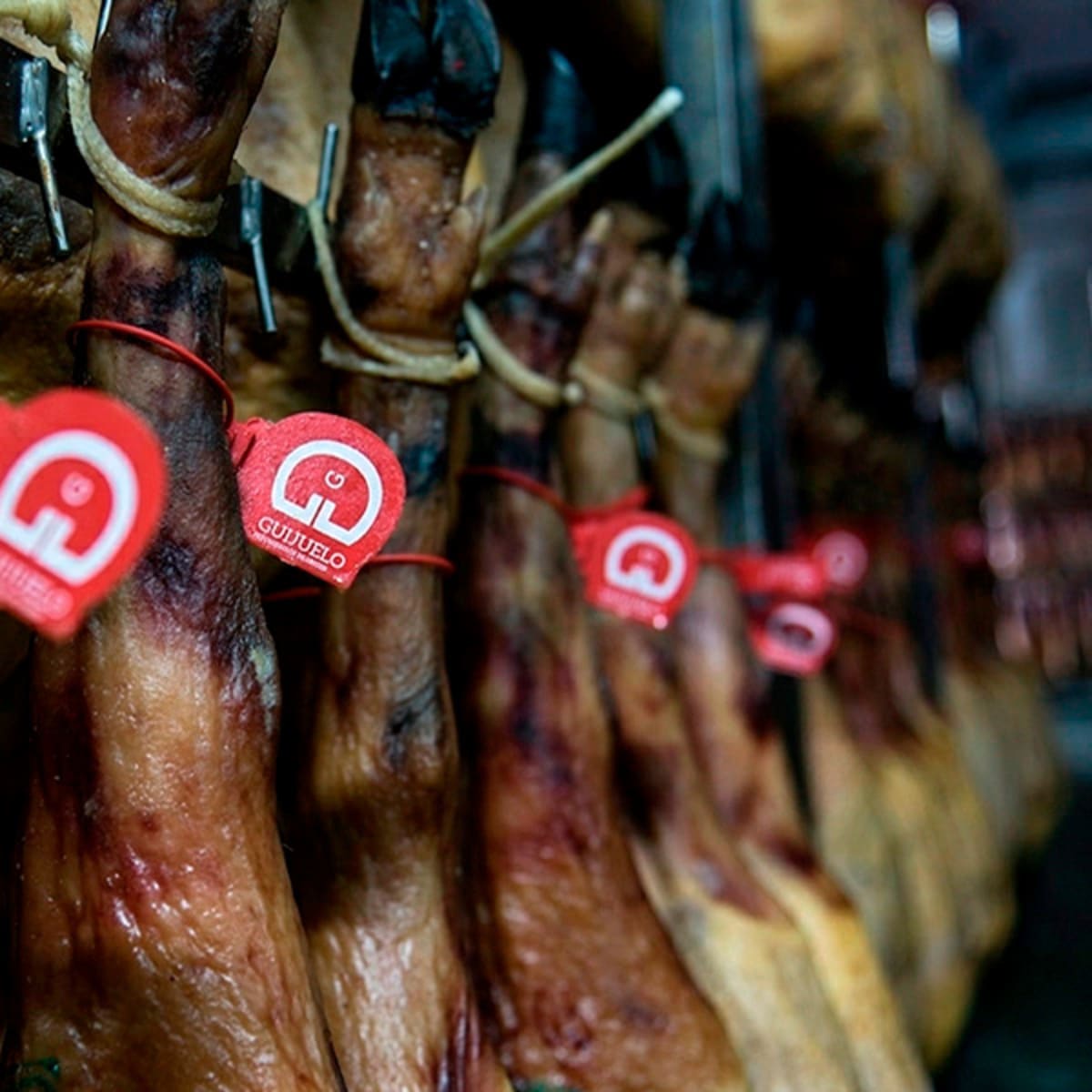
It’s worth not confusing two things that protect different aspects. RD 4/2014 is the national quality standard: it regulates breed and diet of all Iberian products, wherever they are made. A Protected Denomination of Origin such as Guijuelo is an additional layer that also certifies the geographic origin and curing method of a specific area. A piece can meet the standard without being PDO; a PDO meets the standard and, in addition, its own specification. We explain it in The PDO Guijuelo explained.
An honest note on the technical details
The standard also sets precise technical requirements —montanera period and conditions, dehesa stocking density, minimum weights and ages— which the administration reviews and updates. For those exact figures it’s best to consult the official text in force (the Spanish Official Gazette and the Ministry of Agriculture), which is the one with legal value. Here we give you the framework; the fine figures, better from the official source.
And in a Hernández Jiménez
We work within this standard and, in addition, under the PDO Guijuelo we have co-founded since 1986: breed, diet and curing, with seal and traceability. You can request the traceability of a piece whenever you wish.