Hernández Jiménez · Guijuelo since 1890
Iberian charcuterie from Guijuelo: direct from the producer
Chorizo, salchichón, loin and Iberian morcón de bellota produced in Guijuelo since 1890. The same 130-year tradition that makes the most recognised Iberian ham in Spain, applied to charcuterie with the same rigour and at the same factory price.
Guijuelo: capital of Iberian products in Salamanca
Guijuelo is the capital of Iberian ham in Spain, but also the home of some of the most appreciated Iberian charcuterie from Guijuelo. The reason is the same for ham and for charcuterie: the microclimate of the sierra of Salamanca at 1,000 metres above sea level. Cold, dry winters with northerly winds allow a slow natural curing that cannot be replicated in an industrial chamber. The enzymes work at their own pace. The result is a sensory profile that the Iberian charcuterie from Salamanca shares with the hams of the same region: lower saltiness, a rounder flavour, a clean finish.
Hernández Jiménez has produced charcuterie in Guijuelo since 1890. The same family, the same cellar, the same Iberian bellota pigs that produce the hams. The charcuterie from this area carries a designation of origin and a quality control that starts at the farm and does not end until the product leaves the cellar.
Our Iberian charcuterie from Guijuelo
- Bellota Iberian chorizo — made with minced Iberian pork, La Vera paprika and natural spices. Cured in the natural drying rooms of Guijuelo.
- Bellota Iberian salchichón — finely minced, with black pepper and spices. Long cellar curing. The softest and most aromatic Iberian charcuterie.
- Bellota Iberian loin — the noblest Iberian charcuterie piece. The whole loin of the pig, marinated, encased and cured for 4–6 months. Lean, with marbled fat, intense and elegant flavour.
- Iberian morcón — the largest charcuterie piece. Coarsely minced meat from the juiciest parts of the Iberian pig, with paprika, garlic and spices. Long curing, very full-flavoured profile.
Direct sale of Guijuelo charcuterie at factory price
The Iberian charcuterie from Guijuelo you find in specialist shops includes the margins of several intermediaries: wholesaler, regional distributor and retailer. Buying directly from the Guijuelo producer — Hernández Jiménez, in the Guijuelo Agri-Food Industrial Estate, Salamanca — eliminates all those margins. The price you see is the factory price. Shipping in 48–72 hours across Europe. 100% money-back guarantee.
Buy Guijuelo charcuterie — direct factory prices
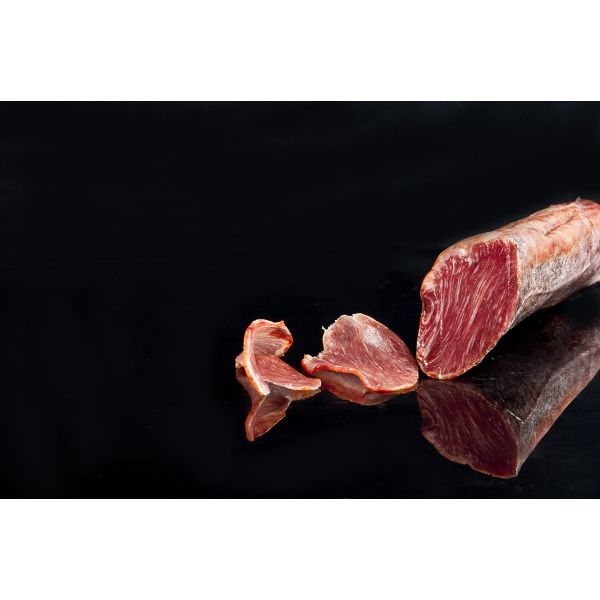
Acorn-fed Iberian loin, whole piece, naturally cured in Guijuelo.
57,99 €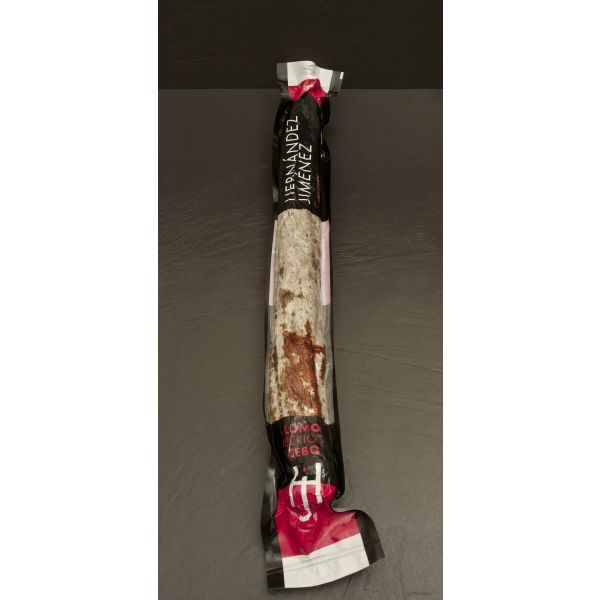
Iberian cebo loin, whole piece, naturally cured in Guijuelo.
50,49 €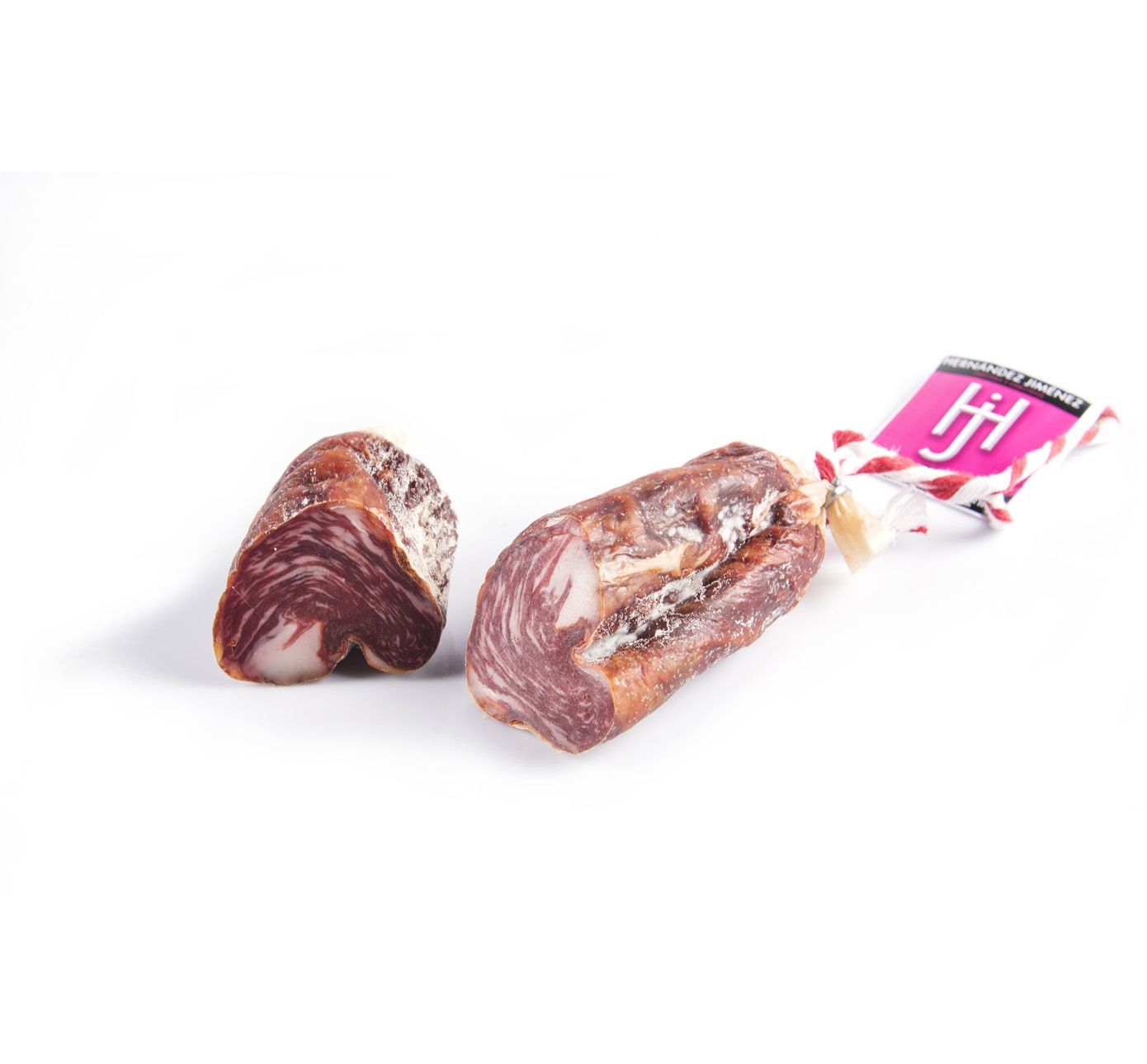
Cured iberian "presa" — the juiciest, most intense cut of the iberian loin
25,49 €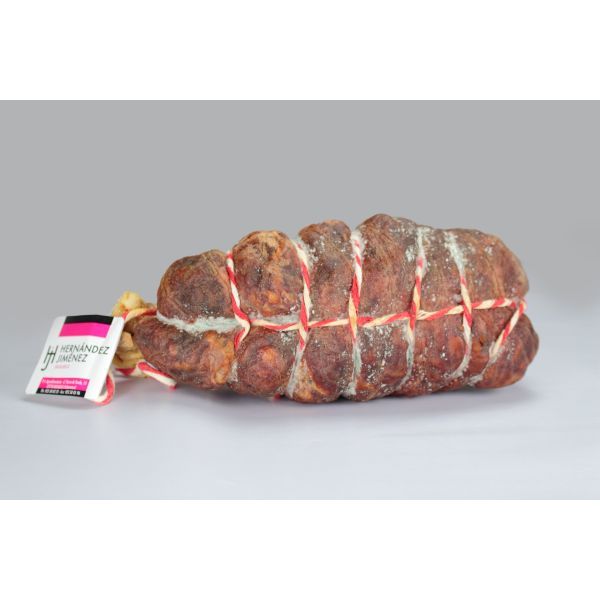
A larger, traditional iberian cured sausage from acorn-fed pigs
18,09 €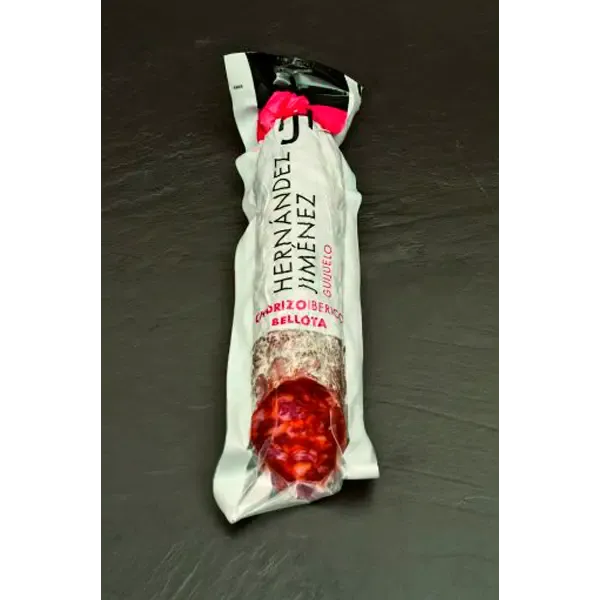
Spain typical beautiful and bright red sausage
16,09 €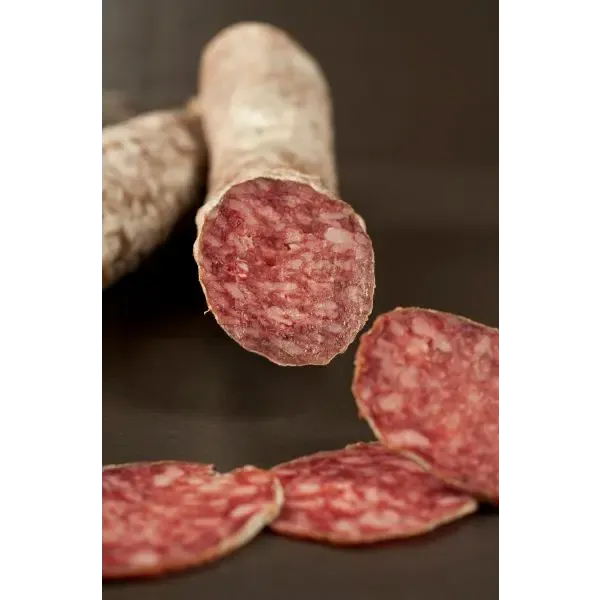
Acorn-fed Iberian salchichón, fine texture and delicate aroma. Natural Guijuelo curing.
16,09 €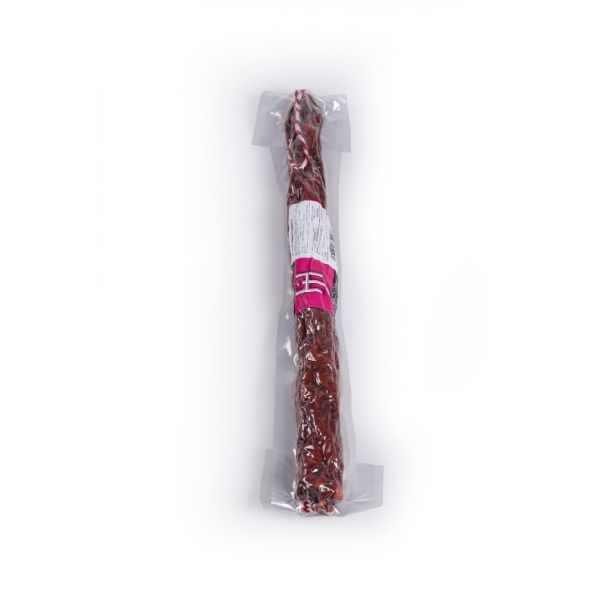
Slender, hand-crafted iberian chorizo — faster cured for a delicate flavour
3,59 €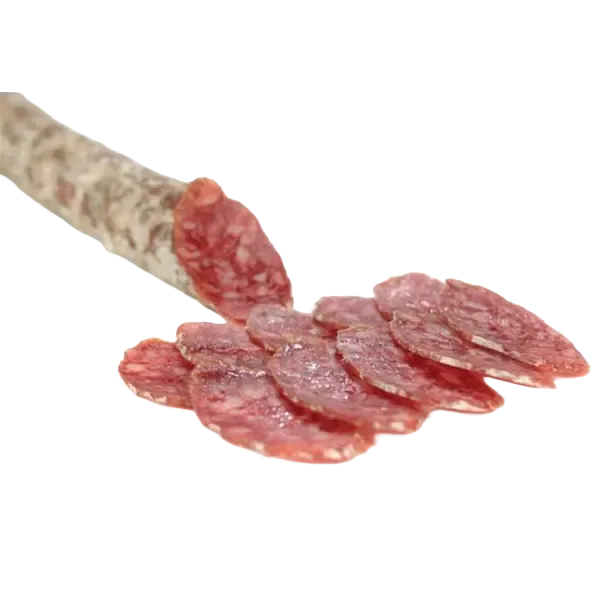
Iberian salchichón in vela format, finely minced, faster curing: delicate flavour, juicy fibre-free meat. Fuet-style.
3,59 €Frequently asked questions
What Iberian charcuterie do you produce in Guijuelo?
We produce four types: bellota Iberian chorizo, bellota Iberian salchichón, bellota Iberian loin and bellota Iberian morcón. All are produced at our factory in the Guijuelo Agri-Food Industrial Estate using certified Iberian pork and cured in a natural drying room at 1,000 metres above sea level.
How should Iberian charcuterie be stored?
Unopened charcuterie should be kept in a cool, dry, dark place, no refrigeration needed. Once the piece is opened, wrap it in butcher's paper or cling film and consume within 2–3 weeks. The loin, being leaner, is slightly more delicate: consume within 10–15 days of the first cut.
What is the difference between Iberian chorizo and salchichón?
Chorizo contains paprika, which gives it its red colour and characteristic spiced flavour. Salchichón contains black pepper and spices without paprika, hence its paler colour and subtler profile. Both are bellota Iberian, but with very different aromatic personalities.